Picture books · Ages 4 to 8 · English and Spanish
Two stories in one book.
Read it forward and it's Bob's story. Turn it over, read the same words back, and it's Otto's.
5 out of 5 stars on Amazon · every book in the series“You’re seeing both sides of the story figuratively, while reading it from both sides of the book literally.”
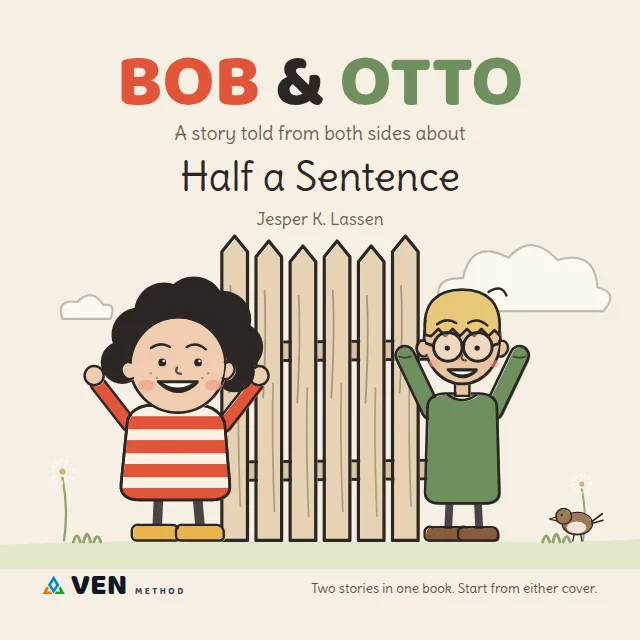
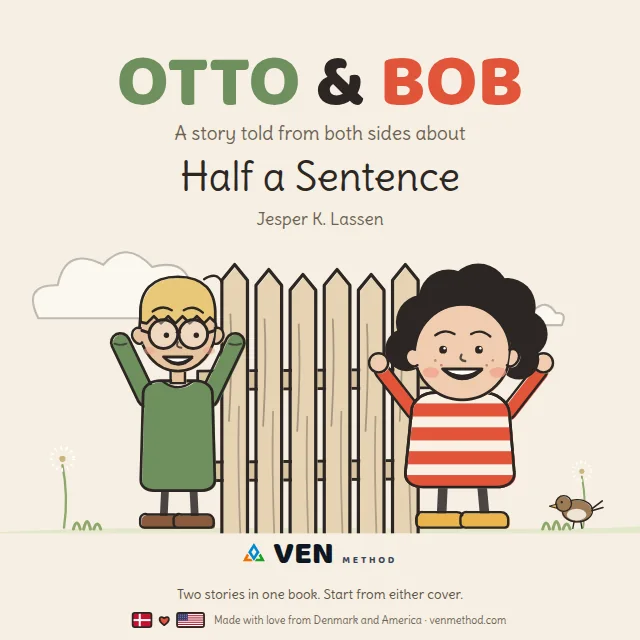
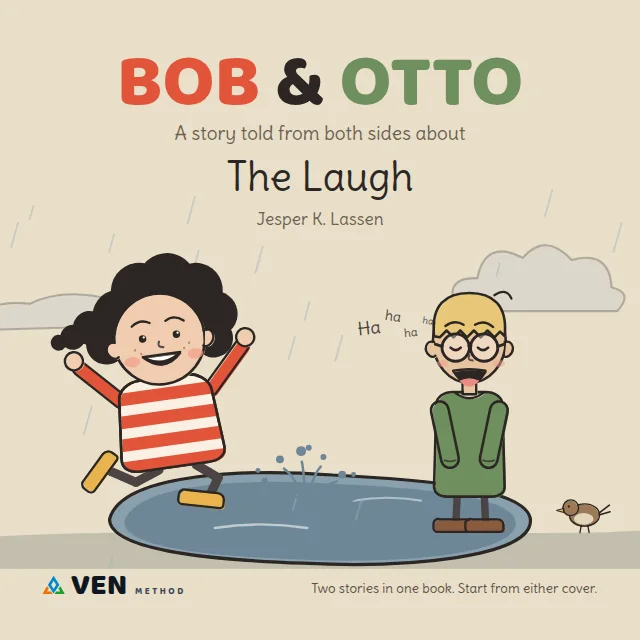
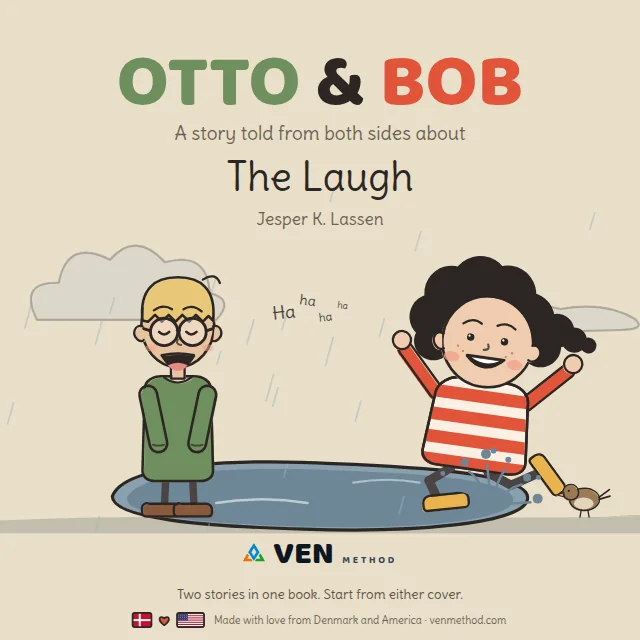
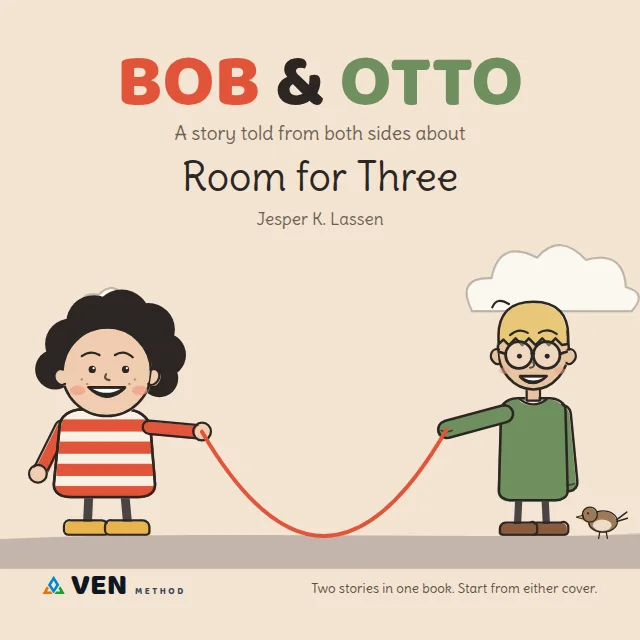
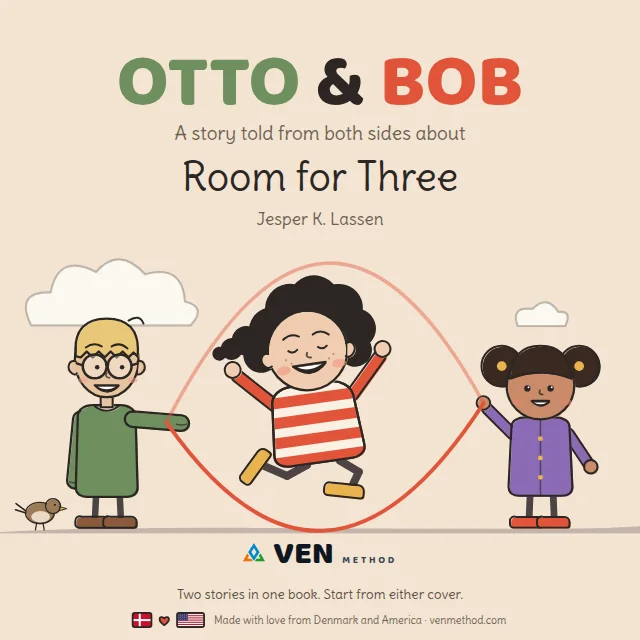
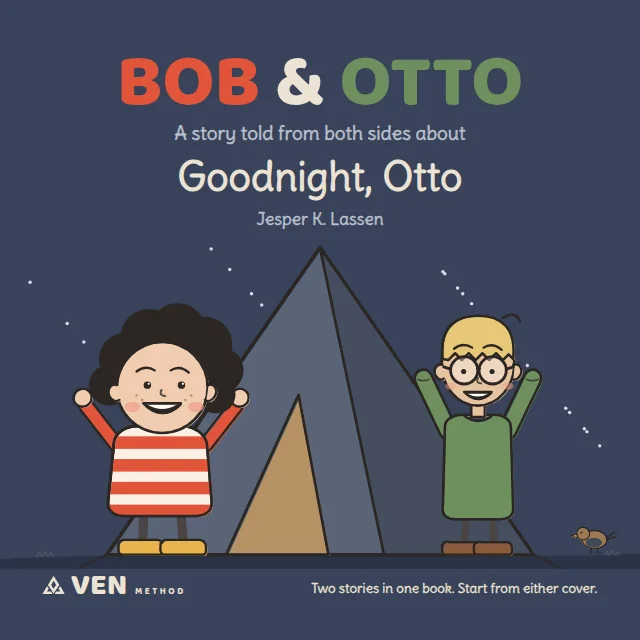
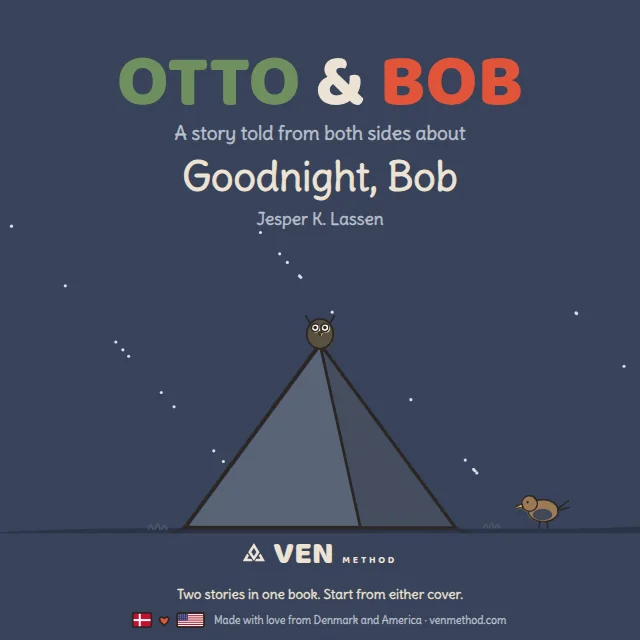
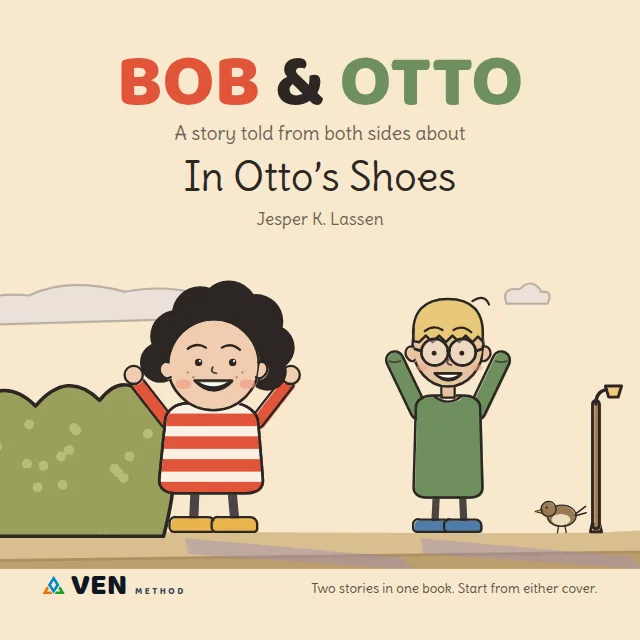
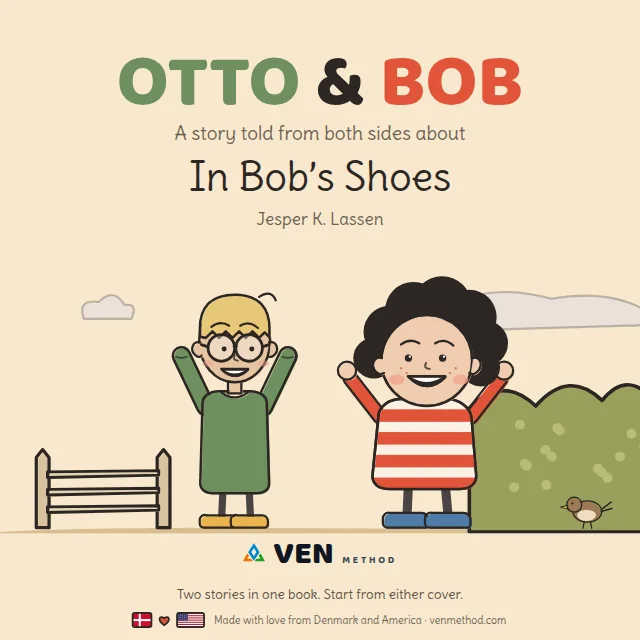
Two free books. Read one here, or print it.
Tap a cover to start with Bob’s side. Printing takes one sheet of paper and one cut.
“Why in the world would an author write a book in this format? Read one and you’ll understand!” — Deb Preston
The Swing a small afternoon, two ways
Bob’s cover. Touch it to turn it over.
Print it: English PDF · Español
We Forgot It Again the funny one
Bob’s cover. Touch it to turn it over.
Print it: English PDF · Español soon
Bob's way · read the left page first
1 of 3
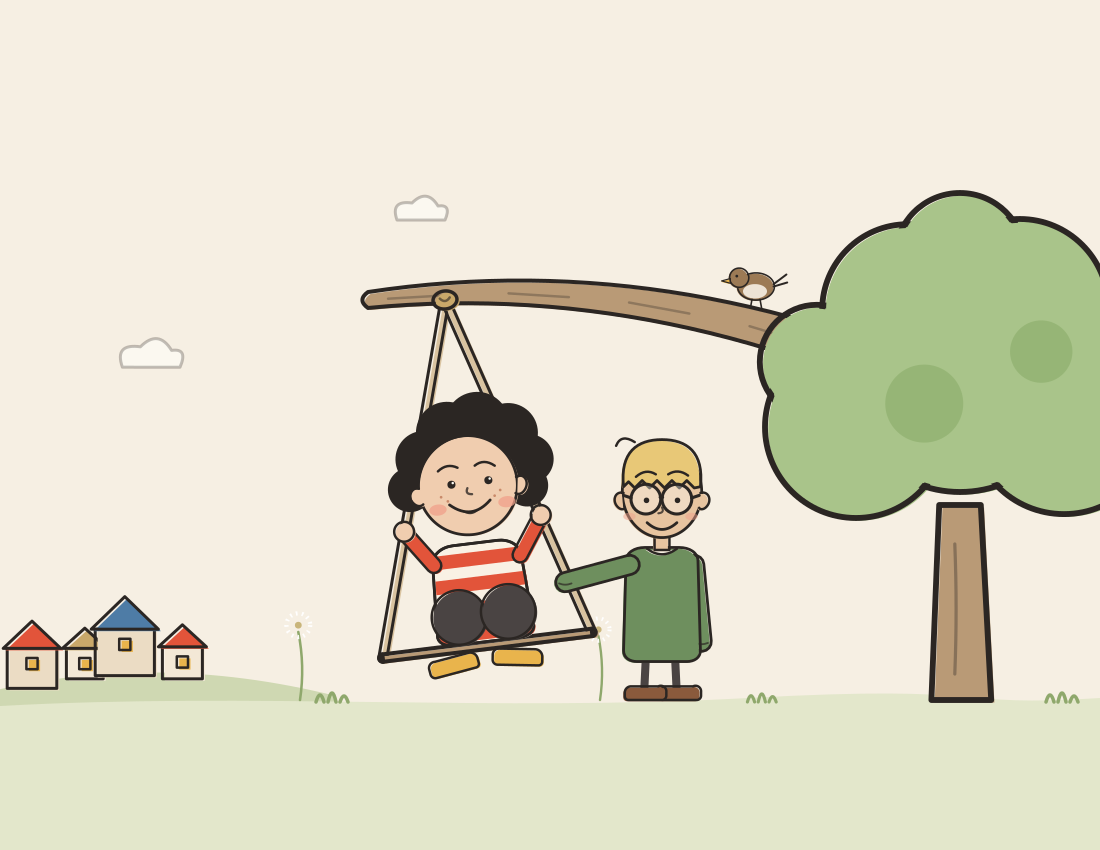
That was Bob's story.
Now turn it over.
Same pages, same words. Read them the other way and they belong to Otto.
Same six lines. Two stories.
Every Bob & Otto book works like this.
Forward, Bob wanted to go higher. Backward, Otto was there the whole way down. Neither of them was wrong — they just had different halves of the same afternoon.
Free to print and copy for home, classroom and library use.
How to fold it — one cut, no glue
- Print on one side, landscape, at 100% — or "fit to page", it folds the same.
- Fold the sheet in half the long way, then unfold it.
- Fold it in half the short way, then fold each end back to the middle, like a fan of four.
- Cut along the dashed line — only across the two middle panels.
- Open it, fold along the long fold, and push both ends in toward the middle. The cut opens into a little book. Bob's cover is on the front; Otto's is on the back.
Five books. Ten stories.
Each one is a small, ordinary misunderstanding between two best friends.
Swipe to see all five →
Book 1
Half a Sentence
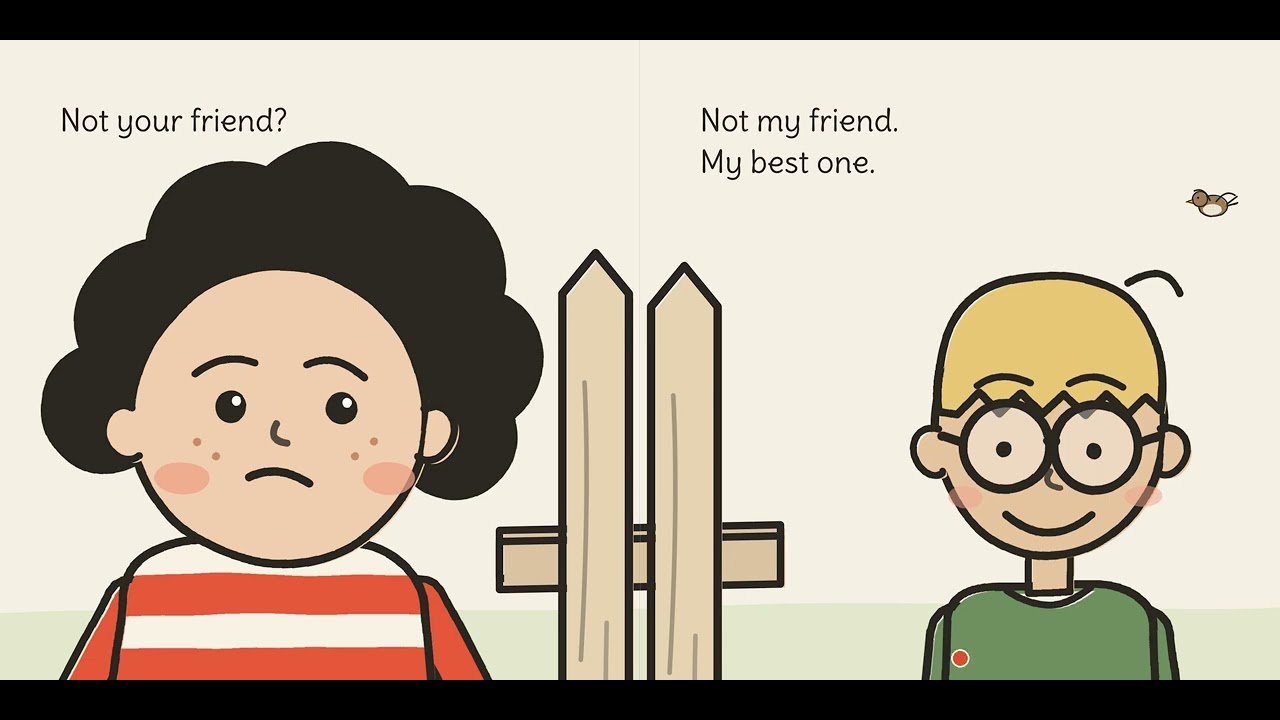
“A fence has gaps. A sentence has two halves.”
Bob hears half a sentence through a fence, and runs off with it.
5.0 on Amazon — rated 5 out of 5“Otto learns to communicate more carefully, Bob learns to listen more carefully…”
En español: Media frase
Book 2
The Laugh
“Yesterday, nobody. Today, you.”
Bob falls in a puddle and Otto laughs. But who is he laughing at?
5.0 on Amazon — rated 5 out of 5“Such a fun and unique way to tell a story!”
En español: La risa
Book 3
Room for Three
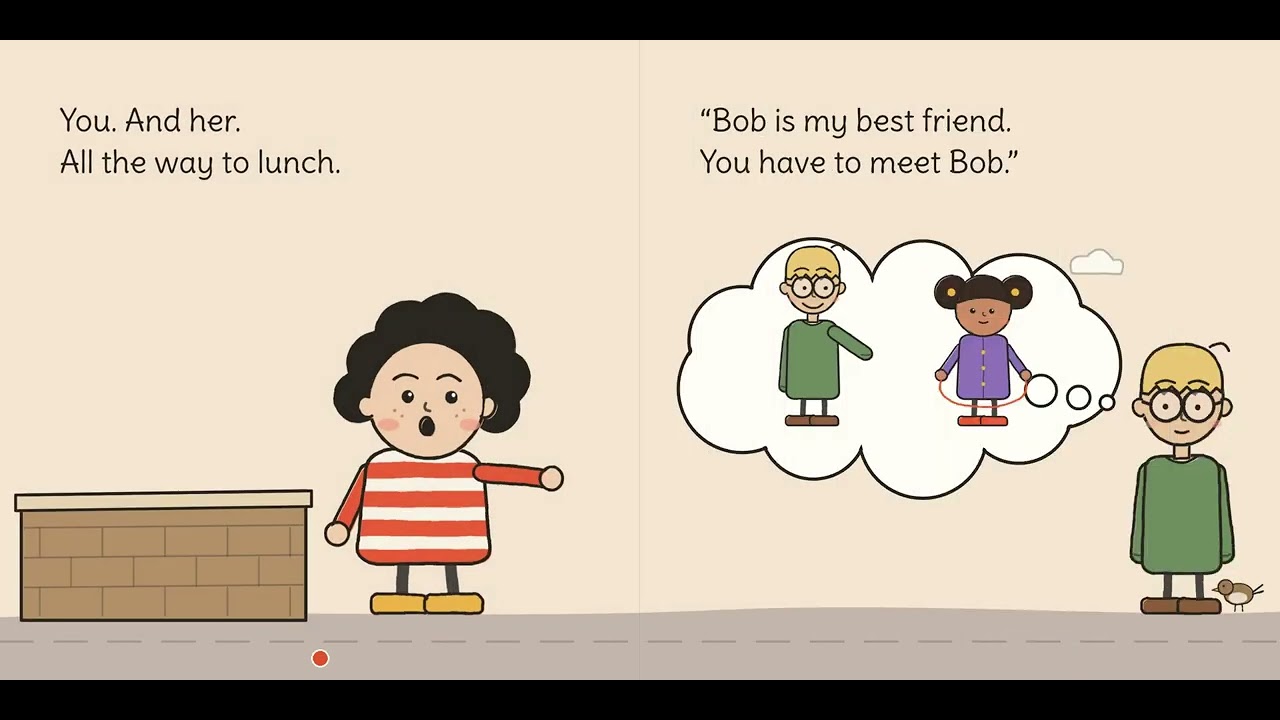
“A rope has two ends. The middle was always for you.”
A new girl at school. Bob counts two, and walks away.
5.0 on Amazon — rated 5 out of 5“…both boys agree that there’s always room for friends.”
En español: Sitio para tres
Book 4
Goodnight, Otto
“Are you nearly asleep?”
Two boys in a tent, and a silence each of them reads differently.
5.0 on Amazon — rated 5 out of 5“A meaningful lesson delivered in a fun and engaging way, without feeling like a lesson.”
En español: Buenas noches, Otto
Book 5
In Otto’s Shoes
“You can’t tell from out there.”
Otto’s new shoes hurt, and Bob can’t tell why. So they swap.
5.0 on Amazon — rated 5 out of 5“…both boys learn to literally walk a mile in one another’s shoes.”
En español: En los zapatos de Otto
Paperback $8.99 in English and Spanish · all five for $39.99 direct from the publisher · Kindle $2.99 · also at Amazon, Barnes & Noble, Walmart, Bookshop.org and stores worldwide · Class sets and bulk orders →
Hear them read aloud.
The whole book, read aloud, about five minutes each. Press play and it plays right here; the pages turn on screen, so a child can follow along. Read it Bob’s way first, then turn the book over for Otto’s.
Half a SentenceThe whole book, read aloud · 4:48Watch on YouTube ↗Narrated by an AI-generated voice. Story and illustrations by Jesper K. Lassen · © 2026 Jesper K. Lassen. All rights reserved. The LaughThe whole book, read aloud · 4:55Watch on YouTube ↗Narrated by an AI-generated voice. Story and illustrations by Jesper K. Lassen · © 2026 Jesper K. Lassen. All rights reserved. Room for ThreeThe whole book, read aloud · 4:55Watch on YouTube ↗Narrated by an AI-generated voice. Story and illustrations by Jesper K. Lassen · © 2026 Jesper K. Lassen. All rights reserved.

The narration in these videos is an AI-generated voice. The words and every picture are Jesper K. Lassen’s own work and are protected by copyright (© 2026 Jesper K. Lassen; published by VEN Method). They may be watched and shared freely; copying or reusing the illustrations or text requires written permission.
Books 4 and 5 are on their way. New read-alouds land first on the VEN Method YouTube channel ↗.
What readers say
Five books. Five stars.
Every Bob & Otto book is rated 5 out of 5 stars on Amazon.

It’s a format I’ve never seen before and the second I heard him describe it, I thought it was such a cool idea!
“…these books say a lot in just a few simple words.”
Deb Preston “It’s entertaining, educational, and genuinely different from other books we’ve read. A fantastic concept that I hope to see more of!”
Rudy E, verified purchase on Amazon “…a thought-provoking, discussion-inducing series that kids and adults alike are sure to enjoy.”
Deb Preston
Most books tell a child to see the other side. These show it.
Forward, you are inside Bob’s head. Turn the book over and you are inside Otto’s: the same words, a different story. The habit it practices: before you decide what someone meant, ask how they heard it.
“Seeing the same story two different ways also helps to teach children lessons that I think are difficult to convey in any other way.” — Deb Preston
- About a hundred words each way. Short enough for bedtime. Twice.
- The last page is the first page. Every book opens and closes on the same line.
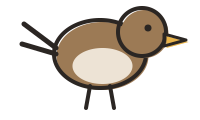
- Find the sparrow. It sits only on Otto’s pages, so a child always knows whose side they’re on.
- One question at the end. What did the other boy mean?
For teachers and counselors
One cut. Two minutes. A ten-minute lesson on hearing the other side.
Read it forward together, turn it over, read it back. Then ask: what did the other boy mean?
“…a book that parents/teachers can read to and discuss with young children, but also a book that early readers can pick up and read for themselves…” — Deb Preston
- Free to copy for classroom and library use
- English and Spanish, for dual-language rooms (why read both)
- Perspective-taking without ever using the word
Thank you.
You're on the list.
I'll write when there’s a new book or a new mini book. In the meantime, both mini books are free to print:
Meet them
Tap anyone to hear them in their own words.
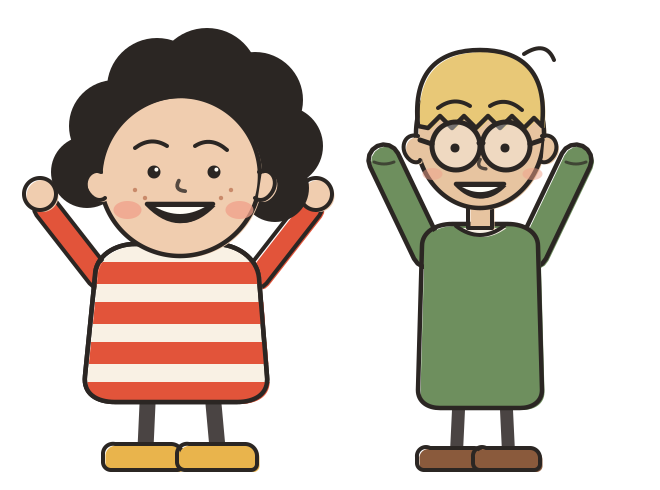
- My favorite color is red. That’s why the stripes.
- I hear things fast. Sometimes faster than they were said.
- I’m learning to hear the whole thing.
- Otto is my best friend.
- My favorite color is green.
- I say things slowly. Sometimes too slowly.
- I’m learning to say the important half first.
- A sparrow follows me around. I don’t know why.
- Bob is my best friend.
- She arrived at school on the day of book three.
- She spent a whole morning hearing about Bob before she met him.
- Her name reads the same backwards. So do theirs.
- It sits on every one of Otto’s pages, and never on Bob’s.
- Nobody knows why it follows him. Not even Otto.
- Find the sparrow and you’ve found your starting page.
Why I made these
I'm Jesper K. Lassen — Danish, a mentalist with more than a thousand performances behind me, and the founder of VEN Method. My whole working life has been about what one person notices and another one misses.
Children carry home bad feelings they never needed, because they heard half of something and decided the rest. I wanted a book that doesn't tell them to see the other side — it hands it to them, and they turn it over themselves.
My interview with Deb Preston ↗ · VEN Method, for classrooms ↗